
Interview with Clint Borgen : « It doesn’t take much to improve living conditions for people »
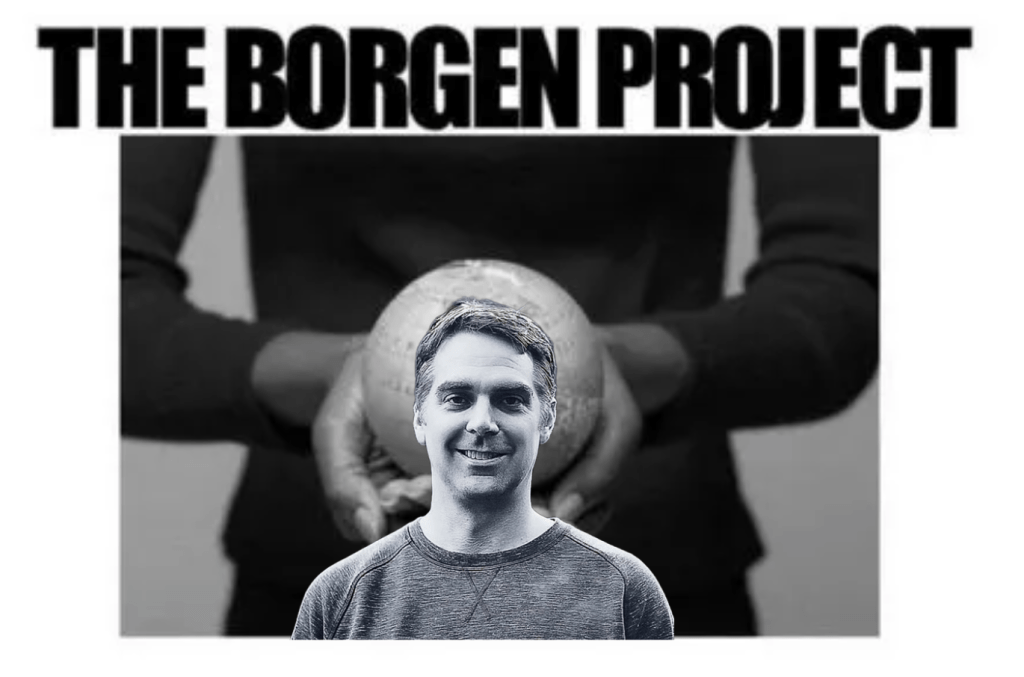
The Borgen Project is a non-profit organization founded in 2003 and headquartered in Tacoma (WA, USA), dedicated to fighting global poverty « at the political level, advancing policies and programs that improve living conditions for those living on less than $1 per day. » The organization is present in 48 countries, with supporters in over 2,300 cities worldwide. It concentrates its advocacy efforts on four primary issues: global food security, maternal and child survival, access to clean water/sanitation, and food aid reform. In practice, The Borgen Project implements a coordinated advocacy strategy by engaging with congressional leaders, mobilizing global supporters, educating citizens on civic activism, and raising awareness about innovative poverty-reduction policies and solutions.
The full interview
The Borgen Project’s founding story traces back to your experience volunteering in a refugee camp during the Kosovo War (1998–99). Could you elaborate on the specific moment or encounter that inspired you to establish this organization? What observations or experiences transformed your awareness into concrete action?
After my sophomore year of college, I volunteered in refugee camps in Macedonia where many people had fled across the border from Kosovo. What really struck me was how relatively simple it is to provide the basics—food, water, shelter. It doesn’t take much to improve living conditions for people. Meeting those immediate human needs isn’t as complex or resource-intensive as people often assume, especially when governments are involved. At the same time, I was deeply disappointed by how little the U.S. was doing to address the crisis. It was frustrating to see such a stark contrast between what could be done and what was actually being done. On the other hand, I found it moving to witness people from around the world coming together to help. It was the first time I saw that kind of global humanitarian effort and I’ve seen it in other crisis zones since. But what really stood out to me was the U.S. intervention in Kosovo (March 1999, with NATO) which played a key role in stopping the ethnic cleansing of Kosovar Albanians. Witnessing that intervention underscored just how profoundly U.S. foreign policy can affect people’s lives, for better or worse. That realization was a major catalyst for starting The Borgen Project. Growing up in a fairly patriotic community, there was this underlying assumption that the U.S. was always doing good in the world. But my time there challenged that belief. I realized how crucial public pressure is in shaping U.S. foreign policy and funding decisions. It became clear to me that members of Congress needed to be pushed to prioritize global poverty and humanitarian aid. A lot of the experience was about observation and reflection. I came back knowing I wanted to do something, even though I wasn’t sure yet what that would look like.
While many organizations prioritize direct aid policies, The Borgen Project operates at the intersection of grassroots advocacy and high-level lobbying. What led you to identify this strategic gap in the broader anti-poverty landscape?
I started to notice this « gap » during my time in Macedonia and Kosovo. On the ground, organizations like UN agencies and various NGOs were doing incredible work, but their operations were dependent on funding from governments. Their ability to deliver aid was directly tied to the priorities and generosity of donor countries. That was the first time I really began connecting the dots between political decisions and humanitarian outcomes. Another big realization came from issues like landmines. At the time, the U.S. hadn’t signed the international Mine Ban Treaty (1997), even though most countries had. It was a clear example of how certain humanitarian issues can only be addressed through political action. You need policymakers to step up if you want systemic change. Over the years, I’ve seen just how crucial government funding is, not only for UN agencies, but also for the NGOs operating in crisis zones. Right now, for example, we’re seeing major cuts to foreign assistance from the White House and the ripple effect has been devastating. Organizations doing vital work on the ground are laying off staff and scaling back operations, not because the need has gone away, but because the funding has! People often think of aid as purely logistical—trucks, food drops, workers on the ground—but rarely ask where that infrastructure is funded from.
The Borgen Project Magazine consistently highlights women’s empowerment initiatives across diverse contexts, from Nigeria to Peru. In your professional assessment, what unique capabilities do women bring to poverty reduction efforts, and how does integrating women into development strategies reshape our global approach to poverty alleviation?
Women play a critical role in long-term poverty reduction. Most sustainable development strategies focus heavily on empowering women, and for good reason. The data clearly shows that when girls are able to complete their education, they are significantly less likely to fall into poverty or be forced into arranged marriages. Investing in girls’ education is beneficial for generations to come. When women are economically empowered and have the tools to provide for themselves and their children, it helps break the cycle of poverty. That’s why so many effective poverty reduction strategies center on increasing women’s agency, whether that’s through access to education, healthcare, economic opportunity, or political participation. I have in mind initiatives like « microloans » that help women become financially independent, especially in areas where traditional banking systems are inaccessible or exclusionary. At The Borgen Project, we haven’t implemented formal gender quotas, but in practice, women have always made up a strong majority of our team, especially here in the U.S. Our Chief of Staff and Vice President, for example, are both women. So while it’s not something we’ve mandated, empowering women has very much been a natural part of our organizational culture.
In your podcast on China’s engagement with African countries, you explored whether its humanitarian initiatives mask deeper strategic interests. In light of Donald Trump’s decision to cut USAID funding by more than 80%, primarily affecting programmes across Africa, how would you assess China’s current humanitarian strategy in Africa?
This is going to be an important and interesting situation to follow, but I truthfully don’t know exactly how it will unfold. Traditionally, China hasn’t played a major role in direct humanitarian assistance because it isn’t central to its approach. Its involvement in Africa has mostly focused on providing infrastructure by building roads, hospitals, and other large-scale projects, often funded through loans that benefit Chinese companies. This is known as the debt-trap diplomacy… In many ways, its engagement has been more about business than humanitarian relief. That said, the drastic Trump cuts to USAID funding have created a massive vacuum, particularly across Africa. I’ve already heard of at least one case where a U.S.-funded hospital lost its funding and China stepped in to fill the gap. It raises the question of whether Beijing might start seeing strategic value in taking a more active role in direct aid, stepping in where the U.S. is pulling out. If so, that would mark a major shift in their foreign aid philosophy. But right now, it’s still early and we don’t have enough on-the-ground data to know if this is becoming a broader trend.
At The Borgen Project, we’re actively trying to push back against these cuts. We’ve been holding meetings with members of Congress to advocate for protecting USAID and foreign assistance. But frankly, this has been one of the strangest and most troubling developments I’ve seen. USAID was established by President John F. Kennedy (1961) and every improvement to it, over the years, has gone through the legislative process. What we are witnessing is a situation where a private entity, essentially a group (DOGE) set up by Elon Musk, has been given sweeping access to government operations and is now dismantling programs that were never supposed to be touched without Congressional oversight. It’s globally destabilizing. The damage being done, both to the U.S.’s credibility abroad and to the lives of people who depend on these programs, is enormous. I don’t think we’ll fully grasp the consequences for another four or five years, but by then, a lot of the harm will have already been done.
At the World Forum on « The Future of Democracy, Tech/AI and Humankind » in Berlin (18 & 19 March 2025), you engaged with world leaders on pressing issues like autocracy and technological manipulation. Based on these discussions, how do you see AI and emerging technologies influencing the fight against global poverty: potentially accelerating poverty reduction or perhaps creating new challenges?
AI and emerging technologies certainly have the potential to revolutionize the fight against global poverty, especially in areas like healthcare. For instance, healthcare workers today can input a patient’s symptoms into an AI system which can then diagnose with up to 99% accuracy. Such technology could allow for more effective treatments in places where doctors may not be available and make medical care more accessible and affordable even in remote regions. However, there are significant risks as well. One personal concern is the potential for AI to eliminate certain jobs. In low-income regions, where jobs are already scarce, it could exacerbate poverty. One of the most effective strategies for poverty reduction has always been creating opportunities for people to earn a decent wage. If large sectors of the job market are automated without sufficient systems to support displaced workers, it could create a new wave of poverty. Personally, I have mixed feelings about this. On one hand, I see the potential for AI to help reduce poverty in tangible ways especially in healthcare and agriculture, but on the other hand, I’m concerned about its unintended consequences. One major issue I worry about is misinformation. We’ve already seen how AI-generated content can manipulate public opinion, which is particularly dangerous in a global context where humanitarian crises are already prone to being misunderstood or ignored.
In his speech at the World Forum, Bill Clinton stated that « the more people participate in the endeavor for democracy, the more likely society is to. » How does this perspective align with the mission of The Borgen Project? In your experience, when mobilizing members of Congress or Parliament, have you observed increased engagement and participation from the broader public?
Absolutely. I think one of the greatest threats to democracy is when people start to feel that their voices don’t matter or that there’s no point in engaging. History shows us that this sense of disengagement often precedes the rise of dictatorships or harmful political shifts. That’s why participation is so crucial. At The Borgen Project, we see this firsthand. For example, we often work with U.S. lawmakers who are initially focused on cutting foreign assistance. Through direct meetings and mobilizing constituents in their districts to reach out to their offices, we’ve been able to shift many of these leaders’ views. They often end up becoming strong supporters of U.S. foreign assistance. It’s a clear example of how public pressure can change perspectives.
Our work shows that even when it seems like we’re not getting immediate support on an issue, just keeping the pressure on can be incredibly valuable. Even with leaders who might not be inclined to support our bills, like Ted Cruz (Republican Senator for Texas in the U.S. Congress), we’ve managed to prevent them from actively opposing our efforts. In Texas, our grassroots efforts have been crucial in ensuring that representatives, despite their political stance, do not block the bills we push, even if they won’t support them outright. Sometimes, just preventing opposition is a win in itself.
This January, you advocated on Capitol Hill alongside doctors returning from Gaza who had been treating wounded children, calling for an end to U.S. military aid to Israel. Given the sensitivity of this issue, could you walk us through the process of advocating on such a political matter? Additionally, what were the outcomes or impact of this particular initiative?
This was a very challenging and sensitive issue to address, but it also presented an important opportunity to raise awareness about the humanitarian situation in Gaza. The process involved us pushing for meetings with lawmakers and trying to get them to hear from the doctors themselves, who could speak with authority about the humanitarian crisis. The doctors we brought to D.C. were all U.S.-based medical professionals who had been treating children in Gaza, either shot by snipers or hit by drones. They had witnessed firsthand the brutality of the situation and their frustration came from the fact that the U.S. continues to provide military support to Israel, despite the horrific consequences of this support on the ground. The biggest challenge we faced was the political climate surrounding this issue. U.S. lawmakers, particularly those in Congress, are very reluctant to take any action that could be perceived as critical of Israel, which makes it almost impossible to have an open, honest conversation about the situation. We did meet with congressional staff, but unfortunately most members of Congress themselves declined direct meetings with the doctors. It was disappointing because these doctors were some of the few Americans who had seen what was happening in Gaza.
In terms of outcomes, while we didn’t see immediate changes in policy, the goal was to plant a seed. The more we raise awareness, engage with lawmakers, and maintain consistent pressure, the more likely it is that change will come. Nevertheless, there were moments where we could see the emotional impact of the doctors’ stories, staffers were visibly moved by what they had heard. Overall, this initiative is part of the longer-term work of advocacy. The key takeaway is that, even though immediate shifts didn’t happen, the conversation started, and that’s the first step toward progress.
 Ma jus cule
Laisser un commentaire