
Interview with H.E. Judge Peter Tomka: « The role of the World Court is not to create law, but to interpret it »
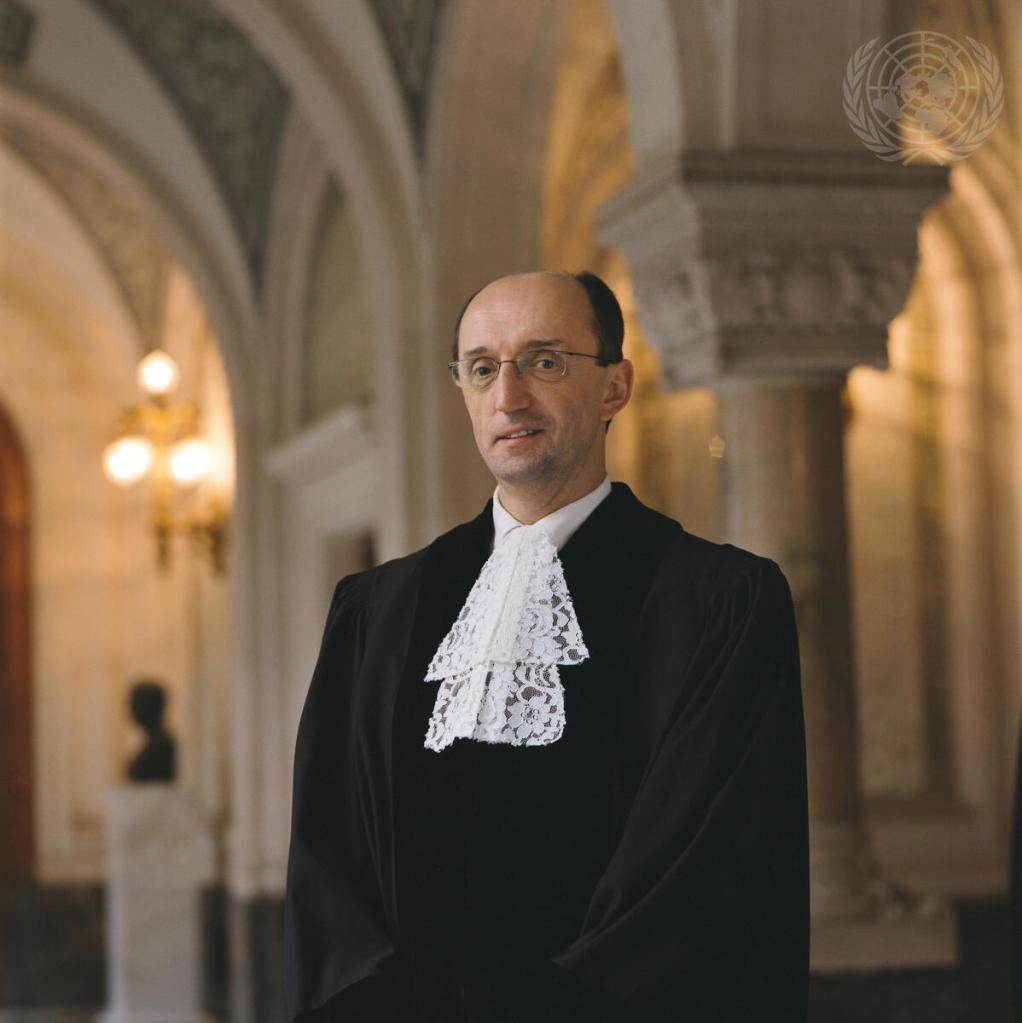
Source : UN Photo/ICJ/Rob Ris., subject to the Terms of usage of UN Photo
Editorial note and remerciements
Since the First Hague Peace Conference of 1899, The Hague has evolved and flourished to become the internationally recognised City of Peace and Justice. For me, however, The Hague carries an altogether more personal significance: it is the City of Dreams Fulfilled. Having cultivated a profound interest in international law and human rights from the outset of my undergraduate studies, the International Court of Justice (ICJ) had long existed in my aspirations as this singular edifice I yearned to witness firsthand. Thus, when I walked through its solemn corridors, observed the noble procession of judicial robes, and gazed at its halcyon gardens this summer, it felt like a major achievement and a dream come true. But as I mentioned above, The Hague is not the city of a single fulfilled dream, but of many. Indeed, what made my summer course in public international law at The Hague Academy of International Law truly special was the opportunity to converse with H.E. Judge Peter Tomka (hereinafter Judge Tomka or His Honour), a figure my Slovak parents have long spoken of with admiration given his distinguished judicial career and extensive experience at the ICJ – and whom I had always hoped to meet. After His Honour’s lecture, The World Court: Dreams, Myths and Realities, I seized the moment to request an interview, which he graciously agreed to grant on Tuesday, July 22.
I would like to express my gratitude to Judge Tomka for several matters of considerable importance. Firstly, I am deeply appreciative of his generosity with time, given that his judicial responsibilities are demanding and that the following interview took place one day prior to the Court’s much-anticipated Advisory Opinion on the Obligations of States in respect of Climate Change. Secondly, I wish to acknowledge His Honour’s consideration in adapting each response to my level of knowledge of international law, and his willingness to render insights into his experience and the work of the ICJ accessible to the readers of Majuscule. Thirdly and finally, I am grateful for His Honour’s assistance with the retranscription process, particularly in ensuring the correct use of judicial terminology and vocabulary, a task that once again required generosity with both time and attention to detail. It is my sincere hope that this interview shall prove faithful to Judge Tomka’s remarkable knowledge of international law and his commitment to promote international justice and peace.
A glimpse into Judge Tomka’s career
Before delving into the content of the interview, it is important to diligently summarise Judge Tomka’s richly layered career. Judge Tomka began his tenure at the ICJ on February 2003 and was subsequently re-elected in 2012 and 2021. He became Vice-President of the Court in 2009, a position he held until 2012 when he assumed its presidency, serving in that capacity until February 2015. To fully comprehend the magnitude of Judge Tomka’s contributions to international law, one must consider that since his tenure at the ICJ, he participated in over sixty cases resulting in more than seventy-five decisions, and authored more than twenty individual opinions. But his impressive career was already underway prior to his arrival at the World Court, following the completion of his Ph.D. in International Law at the Faculty of Law of Charles University in 1985 (Codification of International Law, Charles University, Prague, 1984). Indeed, Judge Tomka’s professional trajectory includes roles within both the Czechoslovak and, later, Slovak Ministries of Foreign Affairs, appointements as Counsellor and Legal Adviser to the Permanent Mission of Czechoslovakia to the United Nations (1991 to 1992) and as Permanent Representative of Slovakia to the United Nations (1994 to 1997). Furthermore, he has served as Chairman or Vice-Chairman of various United Nations committees and working groups on more than ten occasions, whilst also authoring numerous scholarly articles in French, English, Slovak and Czech on topics including codification in international law, the practice of the ICJ, and dispute resolution in international law. Additionally, Judge Tomka has been a member of the Permanent Court of Arbitration since 1994. For an exhaustive overview of Judge Tomka’s career, I invite readers to consult the websites of the ICJ and the United Nations Digital Library System.
The full interview
1. Your Honour, during your time at the International Court of Justice (ICJ), you have ruled on more than fifty cases, many of which were significant and covered a wide range of topics – from human rights issues to territorial and maritime disputes. Which of these cases left the strongest impression on you personally? Which do you consider most important for the case law of the ICJ and the development of international law?
There have been many such cases in my twenty-two years of judicial practice. Of course, several cases come to mind, some of which were challenging and difficult. Among these, I regard the 2009 Judgment in the case concerning Maritime Delimitation in the Black Sea (Romania v. Ukraine) as particularly significant for the Court’s case law. Why was it important? The Court expressed more precisely and clearly the method of delimitation of claims under the United Nations Convention on the Law of the Sea (1982), so that the boundary – whether of the exclusive economic zone or the continental shelf – would be determined by agreement between the parties in order to achieve an « equitable result. » Equitable result has not always been interpreted in the same way in international law, but after almost fifteen to twenty years of judicial activity in the field of maritime delimitation, the Court finally outlined a more precise method for determining maritime boundaries, consisting of three steps: 1) first, the Court defines the base points points on the coast and draws a preliminary equidistance line; 2) it then examines whether there are relevant circumstances that would require this preliminary equidistance line to be adjusted; 3) finally, the Court verifies whether the result is fair and whether there is any obvious imbalance in the ratio between the divided parts of the disputed maritime zone and the length of the coastline, the so-called « côte pertinente, » which gives entitlement to maritime areas. Additionally, the Maritime Delimitation in the Black Sea Judgment is remarkable in that it was adopted unanimously, with even the two ad hoc judges appointed by the respective parties voting in favour of the decision. Notably, it remains unique among the Court’s case law, as it is the only instance in which no judge appended a separate statement, declaration or dissenting opinion.
2. I would now like to ask Your Honour two questions about current global issues, namely climate change and the Israeli-Palestinian conflict.
a. My first question pertains to the Advisory Opinion on the Obligations of States in respect of Climate Change, which the ICJ is scheduled to deliver tomorrow (July 23rd, 2025). This is an unprecedented event that will undoubtedly be one of the most significant advisory opinions in the Court’s history. My generation has high hopes for this opinion as a legal and moral impetus for real action in the fight against climate change. Without commenting on the conclusions themselves, which will be made public, could you please share your thoughts on the significance and symbolic impact of this Advisory Opinion?
The future will unveil the impact that this Advisory Opinion will have on state behaviour. Undoubtedly, some States will take it into account in future negotiations, such as those between parties to the United Nations Framework Convention on Climate Change (UNFCCC, 1992) and The Paris Agreement (2015). In this Advisory Opinion, the Court examines and analyses relevant international treaties in the field of climate change, the role of customary law and the principles derived from it, as well as certain human rights conventions and legal instruments as climate change ultimately affects how people can enjoy or exercise their rights. This is probably one of the most comprehensive advisory opinions – and probably the longest in the history of the Court – but now we must wait until it is published for experts to comment on its quality and impact. However, it is crucial that countries consistently fulfil the commitments they have made, particularly under international climate change agreements such as the already mentioned UNFCCC and The Paris Agreement.
b. My second question refers to your experience with two significant advisory opinions, that is the Legal Consequences of the Construction of a Wall in the Occupied Palestinian Territory (July 9th, 2004) and the Legal Consequences arising from the Policies and Practices of Israel in the Occupied Palestinian Territory, including East Jerusalem (July 19th, 2024). Being interested in international humanitarian law, I was particularly drawn to a passage from the 2004 Advisory Opinion – subsequently cited in the 2024 Advisory Opinion – that states: « some rights may be exclusively matters of international humanitarian law; others may be exclusively matters of human rights law; yet others may be matters of both these branches of international law » (p. 178, para. 106). In your opinion, what role does the ICJ play in guiding these normative interactions (« interactions normatives ») and in maintaining the coexistence of multiple legal regimes (« coexistence de plusieurs régimes juridiques »)?
In this matter, the Court analysed international humanitarian law and human rights conventions and qualified the possible relationships between these two legal systems. International humanitarian law is principally concerned with the protection of persons affected by armed conflict, most notably civilians, as well as prisoners of war and other vulnerable groups. Its provisions are designed to alleviate human suffering during hostilities and to impose limitations on the means and methods of warfare. In contrast, human rights conventions are principally aimed at safeguarding the fundamental rights and freedoms of individuals at all times, with their scope of application determined by the respective treaty provisions. For example, according to human rights law, everyone has the right to life. However, in the event of an armed conflict, it is primarily international humanitarian law that applies when members of two armies are fighting each other and one of them is killed in combat, not human rights conventions. In such a case, we cannot speak of a violation of the International Covenant on Civil and Political Rights (1966) – which guarantees the right to life (Article 6) – if the act is lawful in the context of an armed conflict and in accordance with the rules of war. Historically, the distinct characteristics and separation of international humanitarian law from human rights law were emphasised. Today, however, there is a growing trend to view these two areas as increasingly parallel, with a particular focus on the importance of human rights protection and conventions. This trend is also evident when addressing new challenges, such as climate change, where human rights protection is naturally linked to international climate change law.
3. In your Declaration for the 2005 Judgment in the case concerning Armed Activities on the Territory of the Congo
(Democratic Republic of the Congo v. Uganda), you confirmed the « duty of vigilance » as a « general and well-recognised principle of international law » (para. 2), referring to the Corfu Channel case. However, during my research, I noted that, although this principle is most frequently associated with companies and corporations, it seems to be disregarded in international law, especially in international humanitarian law. What is your perception of the normative force and legal authority of the « duty of vigilance » when applied to States in the context of international law?
In this particular case, some actions including violations of human rights and the unauthorised exploitation of natural resources by persons under Uganda’s jurisdiction, were assessed in light of the “duty of vigilance” which Uganda failed to fulfil. The parties to a conflict are strictly obligated to respect these fundamental principles of international humanitarian law and the law of international armed conflict. In inter-state relations, the principle of the « duty of vigilance » has been applied since 1949, when it was referenced by the ICJ in the Corfu Channel (United Kingdom of Great Britain and Northern Ireland v. Albania) case. According to this principle, a State must not knowingly allow its territory to be used for activities that violate the rights or interests of other States. The principle of « duty of vigilance » has broader application in international law and is expected to be analysed in the Advisory Opinion on the Obligations of States in respect of Climate Change. However, in the field of the law of armed conflict, this principle is not strictly applicable. In this area of law, there is a requirement to distinguish between military and non-military subjects, as well as between combatants (i.e. those actively participating in hostilities) and non-combatants. Nonetheless, this key principle remains highly relevant today, as States have an obligation to prevent the deliberate misuse of their territory for actions that harm the rights and interests of other countries.
4. Between 1993 and 2003, you acted as the representative of the Slovak Republic before the ICJ in the Gabčíkovo-Nagymaros Project (Hungary v. Slovakia) case. Your Honour, could you first share your experience representing a State in such an important international case? And second, how did that experience influence your later role as an ICJ judge?
This particular case was very interesting for me and gave me invaluable hands-on experience. I believe that the practical experience of representing a State in proceedings before the ICJ significantly helped me better understand the needs of the parties to a dispute, especially with regard to procedural matters that are often examined at the request of one side or the other. In fact, it was through this case that Slovakia first asserted its international legal personality. I personally led the negotiations on behalf of Slovakia. They began during the final days of Czechoslovakia’s existence, but since the agreement text was not yet finalised, the responsibility for negotiations fell to me. It was essential to have a strong legal team, and the Slovak Republic was able to assemble one. Our team included, for example, Professor Derek Bowett from the University of Cambridge, Professor Rosalyn Higgins – who later became the first female judge elected to the ICJ – Professor Alain Pellet from France, and later Professor Stephen McCaffrey, a recognised expert in international water law and international environmental law. The case was notable because, at Slovakia’s request, the Court decided to carry out a site visit to the locations where the project was to be implemented. On the Hungarian side, the dam at Nagymaros had not been built, so the Court visited both Slovak and Hungarian territories, allowing the judges to better understand the situation « on the ground ». This visit took place between the first and second rounds of hearings, and I believe it was a key moment as it gave the judges a much clearer picture than they could have gained from the oral arguments of counsels or experts alone. The judgment itself is also significant in that it represents an important contribution to the case law of the ICJ. It clarified several legal concepts. For example, the Court analysed the grounds for the termination of international treaties, the notion of necessity as a circumstance precluding wrongfulness, and the issue of succession to international treaties – particularly those establishing territorial regimes. It also addressed certain aspects of the law of state responsibility, especially the duty to provide reparation. Furthermore, this judgment remains a meaningful contribution to international law and its interpretation: the role of the World Court is not to create law, but to interpret it. Through the interpretation of legal institutions, principles, and norms, the Court contributes to the development of international law. Its role is therefore not to invent new rules, but to apply and clarify existing ones. Since many legal concepts are not precisely defined, the Court’s interpretative work plays a vital role in enhancing legal certainty in relations between States. That’s why the case was so interesting, not just because I was involved in it, but because it is widely regarded as one of the landmark cases, frequently cited and relied upon in other international legal disputes, whether before the ICJ or in investment arbitration.
5. My fifth question addresses your article « Major Complexities Encountered in Contemporary International Law-Making, » featured in the publication Making Better International Law: The International Law Commission at 50 (1998). Your Honour writes that « States retain the final control over that law and it is up to them to take care to avoid conflicts or disharmony between the different normative instruments which they jointly produce » (pp. 90-91). How should we interpret this statement today? Does it express a rather pessimistic view of the limited ability of the ICJ to secure peace, or a realistic recognition that the Court is only one of several actors in a complex system of peacekeeping, or an optimistic belief in the growing importance and authority of the Court?
The ICJ is undoubtedly of great importance as it is the principal judicial organ of the United Nations (UN). However, there are certain limitations to what the Court can and cannot achieve. The first of these is the issue of jurisdiction, which is not generally compulsory but depends on the consent of States. In other words, UN Member States are not obliged to accept the jurisdiction of the ICJ. This stands in contrast, for example, to the courts in Luxembourg and Strasbourg. All Member States of the European Union automatically accept the jurisdiction of the Court of Justice of the European Union as do the Member States of the Council of Europe with the jurisdiction of the European Court of Human Rights. In practice, the ICJ finds it difficult to prevent major wars and armed conflicts. If States do not respect its rulings, the only way to enforce them is by appealing to the UN Security Council, as envisaged by the UN Charter. However, in the Security Council, unanimity among the permanent members is required, meaning that none of the five permanent members may vote against a proposed measure. For these reasons, some ICJ decisions can be effective only if their implementation is supported by the UN Security Council, and the Court is often only able to rule on the legal consequences of an armed conflict after it has ended. A good example is the ICJ’s decision on the amount of reparations Uganda must pay to the Democratic Republic of the Congo in connection with Uganda’s four-year illegal occupation of Ituri province. It is therefore necessary to view the Court’s capabilities realistically and to remain aware of its limitations in global matters of peace and security.
6. For the penultimate question, I would like to ask Your Honour a more personal question. In your view, what makes a good judge at ICJ and what makes an effective Permanent Representative of a State to the United Nations, given your own experience representing the Slovak Republic in that role from 1994 to 1997?
These are two different profiles and two different roles. A Permanent Representative to the UN must be someone who is not only aware of their country’s interests, but who also actively puts forward recommendations, which are then submitted for approval. It is important that they have the ability to establish and maintain contacts with as many other Permanent Representatives as possible. A large part of the negotiations and decisions also depend on good interpersonal and partnership relations with colleagues, as they also submit recommendations to their governments. Therefore, an effective Permanent Representative should be well informed, but also skilled in communication and cooperation with partners. The role of a judge is different. Judges often work alone in their offices, where they carefully study written materials and oral arguments of the parties to the dispute, form their own opinion, and then present and discuss it in collective proceedings with their fellow judges. A « good » ICJ judge must be able to contribute to the dialogue that leads to the final judgment. At the same time, they must always maintain their integrity and uphold their own opinion, which may not necessarily be in line with the views of the majority.
7. Lastly, as a French Red Cross volunteer, I was pleasantly surprised to learn that Your Honour was the Czechoslovak delegate to the twenty-fifth International Conference of the Red Cross in Geneva in 1986. What led to your selection for this role, and what are your most vivid memories or reflections from participating in that conference?
I recall that conference quite vividly, as it represented my very first experience participating in an international conference. Until 1986, I was studying at the Faculty of Law, after which I sought to gain practical experience. As Secretary of the Czech-Slovak Society for International Law, I eventually secured a position in the International Law Department of the Ministry of Foreign Affairs. The Red Cross Conference became my first major international experience. At the time, the Chair of the Czechoslovak Red Cross Committee was Dr. Imrich Hatiar, then Deputy Minister of Health of the Slovak Republic. He did not speak foreign languages fluently and his knowledge of French was « limited » to reading a prepared text. As a result, he requested a legal advisor from the Ministry of Foreign Affairs to accompany him and represent him during the committee sessions at the conference, which included both representatives of Red Cross National Societies and government delegations. That is how I came to attend the conference in Geneva. However, much of the conference was centred on a dispute over whether the South African delegation would be permitted to participate fully in the proceedings. Specifically, the issue was whether its credentials would be accepted and it would be allowed to participate in the conference.


 Ma jus cule
Répondre à Alec DONDERO Annuler la réponse.